
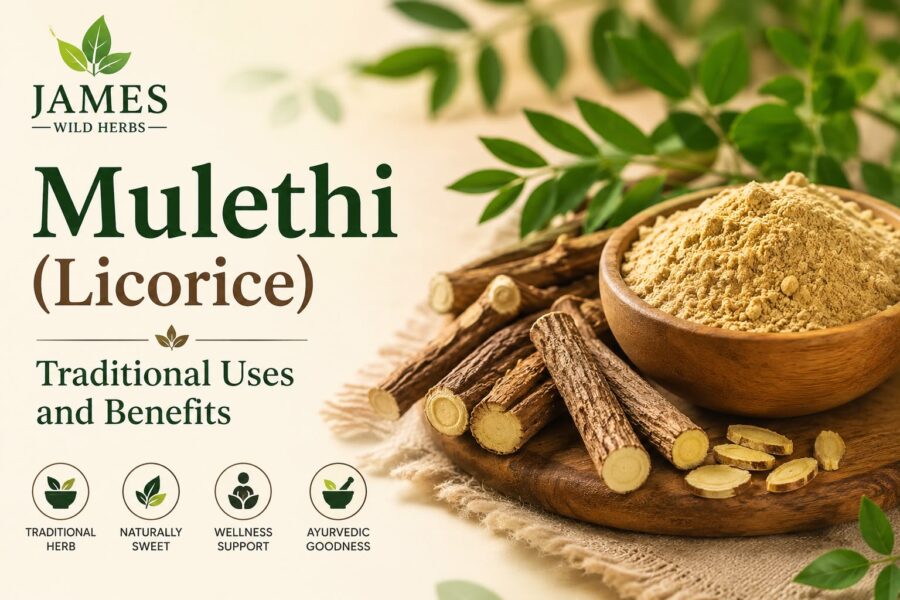
Mulethi, commonly known as Licorice, is one of the most well-known herbs used in traditional Indian and Ayurvedic practices. Derived from the root of the Glycyrrhiza glabra plant, Mulethi has been valued for generations for its naturally sweet taste and traditional wellness applications.
Today, Mulethi is available in different forms, including dried roots, herbal powders, teas, and herbal preparations. This article explores Mulethi’s traditional uses, potential benefits, ways it is commonly used, and important considerations when adding it to a wellness routine.
What Is Mulethi?
Mulethi is the dried root of the licorice plant, scientifically known as Glycyrrhiza glabra. The plant belongs to the legume family and has a long history of traditional use in India and other parts of Asia and Europe.
The root contains naturally occurring compounds, including glycyrrhizin, which is responsible for much of its characteristic sweetness.
In Ayurveda, Mulethi is traditionally known as Yashtimadhu and has been used in various traditional herbal preparations.
Traditional Uses of Mulethi
Mulethi has been used traditionally for a variety of wellness purposes. Some of its most common traditional applications include:
- Traditional Throat and Respiratory Support
Mulethi has traditionally been used in herbal preparations intended to soothe the throat. Its naturally sweet and aromatic root is commonly included in traditional teas and herbal mixtures.
It is particularly popular during seasonal changes when people may prefer soothing herbal drinks.
- Traditional Digestive Wellness
Mulethi has also been used traditionally as part of digestive wellness practices. In traditional herbal systems, it has been included in preparations designed to support comfortable digestion.
Its naturally soothing qualities have made it a popular ingredient in many traditional formulations.
- Traditional Skin and Personal Care
Licorice root is also used in traditional and modern cosmetic preparations. Extracts derived from licorice may be found in various skincare products.
Traditionally, Mulethi has been valued as a botanical ingredient for maintaining healthy-looking skin.
- Traditional Herbal Teas
Mulethi root can be used as an ingredient in herbal teas. Because of its naturally sweet flavor, it can add sweetness and a distinctive taste to herbal preparations without relying entirely on refined sugar.
It is often combined with other herbs depending on the intended traditional use.
- Traditional Ayurvedic Preparations
In Ayurveda, Mulethi or Yashtimadhu has traditionally been included in a variety of herbal formulations. It has been valued as a versatile herb and is often combined with other botanicals.
Potential Benefits of Mulethi
Mulethi contains several naturally occurring plant compounds that have been studied for their biological properties. However, traditional use and scientific evidence are not always equivalent, and more research may be needed for specific health claims.
Some commonly discussed potential properties of licorice include:
- Naturally soothing properties
- Antioxidant activity
- Traditional digestive support
- Traditional throat-soothing applications
- Use in traditional respiratory preparations
- Use in skincare and cosmetic formulations
The benefits of any herbal product can vary depending on the preparation, quantity, quality, and individual factors.
Mulethi for Throat Comfort
One of the best-known traditional uses of Mulethi is for throat comfort.
Mulethi root has a naturally sweet taste and contains compounds traditionally associated with soothing properties. It may be used in herbal teas or other traditional preparations.
Many people enjoy Mulethi as part of a warm herbal beverage, especially during colder months.
Mulethi and Digestion
Traditional systems of herbal medicine have used Mulethi in preparations associated with digestive comfort.
Rather than viewing a single herb as a replacement for a balanced diet or medical treatment, Mulethi can be considered one botanical ingredient that has historically been incorporated into traditional wellness practices.
Mulethi in Skincare
Licorice root extracts are commonly used in cosmetic and skincare formulations. Various compounds found in licorice have attracted scientific interest for their potential effects on skin appearance.
Because skincare products can vary significantly in formulation and concentration, it is important to follow the manufacturer’s recommended usage instructions.
How Is Mulethi Commonly Used?
Mulethi can be found in several forms, including:
- Mulethi root
- Mulethi powder
- Herbal tea blends
- Herbal extracts
- Ayurvedic formulations
- Cosmetic preparations
The appropriate method of use depends on the specific product and its formulation.
If using Mulethi powder, always follow the product’s recommended serving instructions rather than assuming that more is better.
How to Choose Good-Quality Mulethi
Quality is important when purchasing any herbal product. When choosing Mulethi, consider the following:
Check the Botanical Name
Look for Glycyrrhiza glabra when identifying genuine licorice root.
Look at the Ingredients
Choose products with clear ingredient information and avoid products with unnecessary additives when a simple herbal product is what you want.
Check Packaging
Good-quality herbal products should be properly packaged to protect them from moisture, contamination, and environmental exposure.
Check Storage Instructions
Follow the manufacturer’s storage recommendations to help maintain the product’s quality.
Mulethi vs. Other Herbal Sweeteners
Mulethi is naturally sweet because of compounds found in its root. This makes it different from many other herbs that have a distinctly bitter or earthy taste.
However, natural sweetness does not automatically mean that Mulethi is suitable for unlimited consumption. It is still important to use herbal products responsibly.
Important Precautions
Although Mulethi has a long history of traditional use, it is not suitable for everyone in every quantity.
Licorice contains glycyrrhizin, which can affect the body’s sodium and potassium balance and may contribute to increased blood pressure or other problems when consumed in excessive amounts or for prolonged periods.
People with high blood pressure, heart or kidney conditions, low potassium, or those taking certain medicines should speak with a qualified healthcare professional before using concentrated licorice products.
Pregnant or breastfeeding individuals should also consult a healthcare professional before using medicinal amounts of licorice.
Mulethi should not be considered a replacement for prescribed medication or professional medical treatment.
Final Thoughts
Mulethi, or Licorice Root, is a traditional herb with a long history of use in Ayurveda and other herbal traditions. From traditional throat-soothing preparations to herbal teas and skincare formulations, its versatility has helped make it a popular botanical ingredient.
When choosing Mulethi, focus on product quality, clear labeling, appropriate usage, and responsible consumption. Traditional herbs can be a valuable part of a balanced wellness lifestyle, but they should be used thoughtfully and with awareness of individual health needs.
James Wild Herbs focuses on bringing traditional herbal ingredients into modern wellness routines while encouraging informed and responsible use of herbal products.