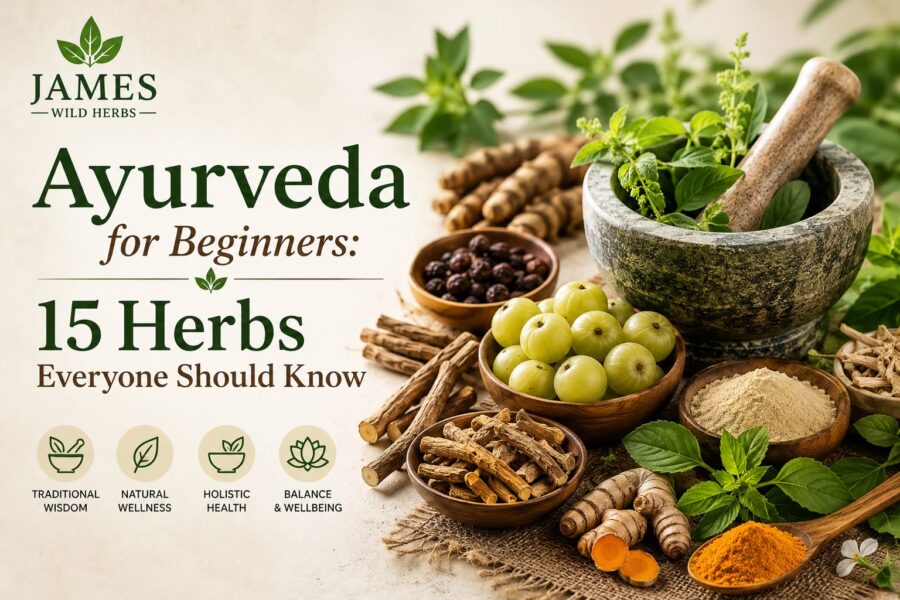
Ayurveda is one of the world’s traditional systems of wellness, with a history spanning thousands of years. It emphasizes balance, mindful living, appropriate nutrition, daily routines, and the traditional use of herbs and botanicals.
For someone new to Ayurveda, the large number of herbs and traditional preparations can feel overwhelming. Fortunately, there are several well-known herbs that frequently appear in traditional Ayurvedic practices and modern herbal products.
In this beginner-friendly guide, we explore 15 popular Ayurvedic herbs, their traditional uses, and what makes them interesting additions to the world of herbal wellness.
Important: The information below describes traditional uses and general herbal knowledge. It is not intended to diagnose, treat, or cure any medical condition. Always consider your individual health needs and consult a qualified healthcare professional when appropriate.
- Ashwagandha
Ashwagandha (Withania somnifera) is one of the most widely recognized Ayurvedic herbs.
Traditionally, Ashwagandha has been used as a rasayana, or rejuvenating botanical, and has been associated with general vitality, strength, relaxation, and overall wellness.
It is commonly available as a powder, capsule, extract, or ingredient in herbal formulations.
- Amla
Amla, also known as Indian Gooseberry, comes from Phyllanthus emblica. It has an important place in traditional Indian wellness practices.
Amla is naturally rich in vitamin C and other plant compounds and is traditionally valued for its role in supporting general wellness.
It is commonly consumed as powder, dried fruit, juice, or as an ingredient in traditional formulations.
- Mulethi
Mulethi, or Licorice Root (Glycyrrhiza glabra), is traditionally known as Yashtimadhu.
It has a naturally sweet taste and has traditionally been used in preparations for throat comfort, digestive wellness, and general herbal support.
Mulethi is also frequently used in herbal teas and traditional formulations.
- Tulsi
Tulsi, commonly called Holy Basil, is scientifically known as Ocimum tenuiflorum.
It has a special place in Indian traditions and is widely used as a herbal tea and botanical ingredient.
Traditionally, Tulsi has been associated with respiratory wellness, seasonal wellbeing, and general vitality.
- Neem
Neem (Azadirachta indica) is a well-known Indian tree whose leaves, bark, and other parts have traditionally been used in Ayurveda.
Neem is particularly popular in traditional skincare and personal-care preparations.
Neem-based ingredients can be found in soaps, powders, oils, and various herbal formulations.
- Giloy
Giloy, also known as Guduchi, is traditionally identified as Tinospora cordifolia.
It has a long history of use in Ayurveda and is traditionally associated with general wellness and vitality.
Giloy is commonly available as powder, tablets, extracts, and herbal preparations.
- Brahmi
Brahmi is commonly associated with Bacopa monnieri, although the name Brahmi can sometimes be used for other plants depending on regional traditions.
Traditionally, Brahmi has been valued in Ayurvedic practices for its association with mental wellness, concentration, and a calm mind.
It is often included in traditional herbal formulations.
- Shatavari
Shatavari (Asparagus racemosus) is a traditional Ayurvedic herb particularly well known in women’s wellness traditions.
Traditionally, it has been used to support general nourishment, vitality, and reproductive wellness.
Shatavari is commonly found in powder and herbal formulations.
- Turmeric
Turmeric (Curcuma longa) is one of the most familiar Indian spices and medicinal botanicals.
Its bright yellow color comes primarily from naturally occurring curcuminoids.
Traditionally, turmeric has been valued for its role in everyday wellness and is widely used in food, traditional preparations, and skincare.
- Triphala
Triphala is not a single herb. It is a traditional Ayurvedic combination of three fruits:
- Amla
- Haritaki
- Bibhitaki
Triphala has traditionally been associated with digestive and general wellness practices.
It is commonly available as powder, tablets, capsules, and other herbal preparations.
- Haritaki
Haritaki (Terminalia chebula) is one of the three ingredients traditionally used in Triphala.
It has been valued in Ayurveda for generations and is traditionally associated with digestive and cleansing practices.
Haritaki is commonly used as a dried fruit or powder.
- Bibhitaki
Bibhitaki (Terminalia bellirica) is another important ingredient of Triphala.
Like other traditional Ayurvedic botanicals, it has been used in various herbal preparations for generations.
Its traditional applications are particularly associated with digestive and respiratory wellness.
- Arjuna
Arjuna (Terminalia arjuna) is a traditional Ayurvedic botanical derived primarily from the tree’s bark.
It has a long history of traditional use, particularly in formulations associated with cardiovascular wellness.
Arjuna is available in powders, extracts, and traditional herbal formulations.
- Shankhpushpi
Shankhpushpi is a traditional Ayurvedic herb commonly associated with mental wellness.
It has traditionally been used in preparations intended to support relaxation, concentration, memory, and overall mental wellbeing.
Different plants may be referred to as Shankhpushpi in different traditions, so checking the botanical identity on a product is important.
- Gokshura
Gokshura, commonly identified as Tribulus terrestris, is another well-known Ayurvedic botanical.
Traditionally, Gokshura has been associated with urinary and reproductive wellness.
It is available in various herbal formulations, including powders, extracts, and capsules.
Why Are These Herbs Important in Ayurveda?
Ayurveda traditionally views herbs as part of a broader approach to wellbeing rather than as isolated solutions.
Traditional Ayurvedic practices may consider factors such as:
- Individual constitution
- Diet
- Daily routine
- Lifestyle
- Season
- Age
- Digestion
- Overall balance
This is why the same herb may be used differently depending on the traditional formulation and individual circumstances.
How Should Beginners Approach Ayurvedic Herbs?
If you are new to herbal wellness, it is better to start with knowledge rather than using many herbs at once.
- Learn the Herb First
Understand the botanical name, traditional uses, form, ingredients, and recommended method of use.
- Choose Quality Products
Look for products with clear labeling, proper packaging, ingredient information, and appropriate storage instructions.
- Follow Recommended Usage
More is not necessarily better. Follow the instructions provided for the specific product.
- Avoid Unnecessary Mixing
Taking numerous concentrated herbs together can make it difficult to understand how your body responds to each one.
- Consider Your Individual Needs
Herbal products are not automatically suitable for everyone. Existing health conditions, allergies, pregnancy, and medications can affect whether a particular herb is appropriate.
Herbs and Modern Wellness
The growing interest in Ayurveda reflects a broader interest in traditional approaches to wellness.
Many people today use herbs as part of routines involving balanced nutrition, exercise, adequate sleep, mindfulness, and healthy lifestyle habits.
However, traditional use should not be confused with proven treatment for a medical condition. Scientific evidence varies considerably from one herb to another, and the quality and concentration of herbal products can also differ.
Choosing Herbal Products Wisely
When purchasing Ayurvedic herbs, consider the following:
Check the botanical name:
Common names can vary between regions, so the botanical name provides greater clarity.
Read the ingredient list:
Know exactly what is included in the product.
Look for proper packaging:
Herbs should be stored in packaging that protects them from moisture and contamination.
Check the instructions:
Follow the recommended serving size and storage conditions.
Buy from a trustworthy source:
Choose brands that provide clear product information and maintain appropriate quality standards.
Important Safety Considerations
Natural does not automatically mean risk-free.
Some herbs can interact with medicines or may not be appropriate for people with certain health conditions. Concentrated extracts can also differ significantly from traditional food-level use.
Certain Ayurvedic products may contain ingredients that require particular caution, and quality control is important.
If you are pregnant or breastfeeding, have an existing medical condition, take prescription medicines, or are considering using herbs for a specific health concern, speak with a qualified healthcare professional before starting a new herbal supplement.
Final Thoughts
Ayurveda offers a rich tradition of herbal knowledge, and learning about its commonly known botanicals can be a great starting point for beginners.
From Ashwagandha, Amla, Mulethi, and Tulsi to Triphala, Shatavari, Brahmi, Neem, and Turmeric, each herb has its own traditional history, characteristics, and applications.
The best approach is to learn about herbs individually, choose quality products, use them responsibly, and remember that herbal wellness works best as part of a balanced lifestyle.
James Wild Herbs aims to make traditional herbal ingredients accessible for modern wellness routines while encouraging informed and responsible use.