
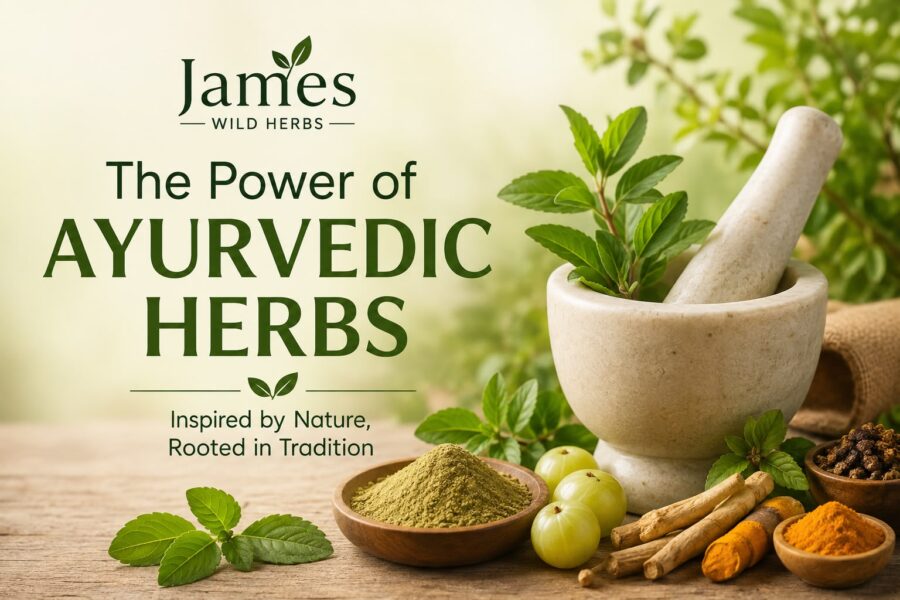
In today’s fast-paced world, people are increasingly looking for natural ways to support a healthier and more balanced lifestyle. Ayurveda, one of India’s oldest traditional wellness systems, has been closely connected with nature for centuries.
Ayurvedic herbs have traditionally been used as part of daily routines, food preparations, personal care, and wellness practices. From tulsi and amla to neem, turmeric, and ashwagandha, India has a rich tradition of using plants and herbs in everyday life.
At James Wild Herbs, we believe that understanding natural ingredients is an important part of making informed choices about herbal products.
What Are Ayurvedic Herbs?
Ayurvedic herbs are plants and botanical ingredients that have traditionally been used in Ayurveda and Indian wellness practices.
Different parts of a plant may be used depending on the herb. These can include:
- Leaves
- Roots
- Seeds
- Fruits
- Flowers
- Bark
- Extracts and powders
Each herb has its own characteristics and traditional applications. However, being natural does not automatically mean that an herb is suitable for everyone. Proper usage, quality, dosage, and individual circumstances should always be considered.
The Connection Between Ayurveda and Nature
Ayurveda has traditionally emphasized living in harmony with nature. Plants, herbs, spices, food, daily routines, and seasonal changes all have an important place in traditional Ayurvedic thinking.
Indian households have used natural ingredients for generations. Many familiar kitchen ingredients, such as turmeric, ginger, cumin, and tulsi, have both culinary and traditional wellness associations.
This connection between nature and everyday life continues to influence modern interest in herbal products.
Popular Ayurvedic Herbs
- Ashwagandha
Ashwagandha is one of the best-known herbs traditionally used in Ayurveda. It has become increasingly popular among people interested in traditional herbal wellness.
It is commonly available as powder, capsules, extracts, and other herbal formulations.
Because herbal products can affect individuals differently, it is important to follow the recommended usage instructions and seek professional advice when necessary.
- Tulsi
Tulsi, also known as Holy Basil, holds a special place in Indian households and traditional practices.
Traditionally, tulsi has been used in herbal teas, home preparations, and various Ayurvedic formulations. Its distinctive aroma and traditional significance have made it one of the most recognizable Indian herbs.
- Amla
Amla, or Indian gooseberry, is another important ingredient in traditional Indian wellness practices.
It is naturally rich in vitamin C and is commonly consumed as fresh fruit, powder, juice, candy, or other preparations.
Amla is also widely used in traditional hair and personal-care practices.
- Neem
Neem is a well-known tree native to the Indian subcontinent. Various parts of the neem plant have traditionally been used in Ayurvedic and household practices.
Neem is particularly associated with traditional skincare and hygiene routines.
Its leaves and other plant parts are found in a variety of herbal preparations.
- Turmeric
Turmeric is one of the most commonly used spices in Indian kitchens. It gives food its characteristic color and flavor and has also been valued in traditional Indian practices for generations.
Turmeric is widely incorporated into food, drinks, skincare preparations, and herbal formulations.
Why Quality Matters in Herbal Products
When choosing herbal products, quality is extremely important.
A good herbal product should clearly mention important information such as:
- Ingredients
- Quantity
- Recommended usage
- Batch information
- Storage instructions
- Manufacturer details
- Expiry or best-before information
Consumers should always read product labels carefully and purchase products from reliable sources.
Understanding what you are buying is just as important as choosing a natural ingredient.
Natural Does Not Mean “Suitable for Everyone”
One common misconception is that every natural ingredient is automatically safe for everyone.
Herbs can have active compounds, and their effects may vary depending on the individual, quantity, preparation, and other factors.
People who are taking regular medications, are pregnant or breastfeeding, or have an existing medical condition should consult a qualified healthcare professional before using herbal supplements or concentrated herbal products.
Herbal products should also not be considered a replacement for prescribed medical treatment.
How to Include Herbs in a Balanced Lifestyle
A healthy lifestyle is not based on a single herb or product.
Instead, it can involve a combination of positive habits such as:
Eat a Balanced Diet
Include a variety of fruits, vegetables, whole grains, legumes, nuts, seeds, and other nutritious foods according to your dietary needs.
Stay Physically Active
Regular movement and physical activity are important parts of maintaining overall fitness.
Get Enough Sleep
A consistent sleep routine can support overall physical and mental well-being.
Stay Hydrated
Drinking adequate water throughout the day is an essential part of a healthy routine.
Use Herbal Products Responsibly
If you choose to include herbal products in your routine, understand their ingredients and follow the recommended instructions.
The Growing Interest in Herbal Wellness
Modern consumers are becoming increasingly interested in traditional ingredients and natural products.
Social media, wellness trends, and growing awareness of traditional knowledge have contributed to the popularity of herbs and botanical ingredients.
However, it is important to separate traditional use from scientifically established medical claims. Responsible herbal brands should provide clear and honest information rather than making exaggerated promises.
Why People Choose Herbal Products
There are many reasons people explore herbal products.
Some people appreciate traditional Indian ingredients. Others prefer botanical formulations for personal care or everyday wellness routines.
For many consumers, herbs represent a connection between traditional knowledge and modern lifestyle.
The key is to choose products carefully and use them responsibly.
James Wild Herbs: Inspired by Nature
James Wild Herbs is inspired by the rich tradition of natural herbs and botanical ingredients.
Our approach focuses on bringing natural and herbal products closer to people while encouraging consumers to understand the ingredients they use.
From traditional herbs to botanical preparations, every product should be selected with attention to quality, transparency, and responsible usage.
Natural living is not about following every trend. It is about making informed choices that fit into your lifestyle.
Final Thoughts
Ayurvedic herbs have been part of Indian traditions for centuries. Ingredients such as ashwagandha, tulsi, amla, neem, and turmeric continue to attract attention because of their traditional significance and connection with nature.
As interest in herbal products grows, consumers should focus on three important things:
Quality. Awareness. Responsible Use.
Choosing a natural product is only the first step. Understanding its ingredients, following appropriate usage instructions, and seeking professional advice when necessary are equally important.
At James Wild Herbs, we believe that the journey toward a more natural lifestyle begins with knowledge, conscious choices, and respect for traditional herbal wisdom.
James Wild Herbs — Inspired by Nature, Rooted in Tradition.